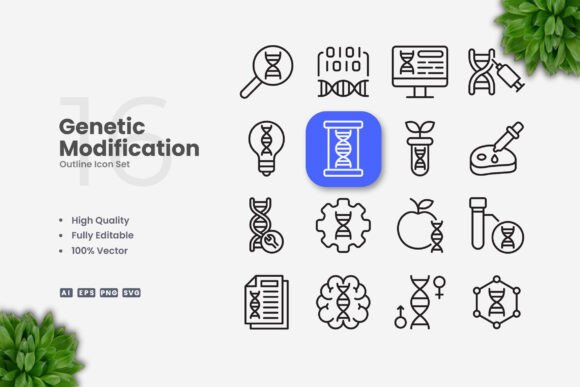
Genetic Modification Icons: Graphics and Icons for Modern Design
As a blog designer and digital publisher, I'm always on the lookout for high-quality graphic design assets that can elevate content presentation and visual storytelling. Genetic Modification Icons offer a simple and clean icon design that fits seamlessly into a wide range of editorial and web design projects. Whether you're working on a science blog, a digital guide, or an educational platform, these icons bring clarity and professionalism to your content.
First Impressions: A Clean Visual Language
From the moment I viewed Genetic Modification Icons, I was struck by their minimalist approach. The design is modern, uncluttered, and highly versatile. It doesn’t scream for attention but instead supports the content it accompanies with a subtle yet effective presence. This makes it ideal for editorial design where visual hierarchy and readability are key.
The icons feel professional and educational, making them a great fit for niches like science, technology, health, and environmental topics. They don’t lean too far into playful or decorative styles, which means they can blend well with a variety of fonts and layouts without clashing.
Real-World Publishing Use Cases
These icons shine in several real publishing scenarios. For example, when creating blog graphics or Pinterest pins, they add a polished touch that helps content stand out. In article headers, they serve as visual cues that guide readers through complex topics, especially in long-form content or digital guides.
For website headers and banners, Genetic Modification Icons provide a consistent visual language that reinforces brand identity. When used in social media graphics, they help maintain a cohesive look across platforms, which is essential for content marketing and affiliate marketing efforts.
They also work well in downloadable resources like worksheets, printables, and lead magnets. Their clean design ensures they remain legible even when scaled down, making them perfect for Canva templates or digital products that users can customize.
Boosting Content Performance
One of the biggest advantages of using Genetic Modification Icons is how they enhance visual hierarchy. By offering clear, recognizable symbols, they help readers quickly understand the purpose of a section or page. This improves click-through potential and keeps visitors engaged longer.
Consistent branding is another key benefit. When used across multiple content formats—like newsletter banners, category thumbnails, or affiliate content visuals—these icons create a unified look that strengthens brand recognition. This is especially important for small business branding and creative entrepreneurs looking to build a strong online presence.
Reader trust is also boosted by the professional appearance of these icons. A well-designed visual element signals that the content is reliable and thoughtfully created, which is crucial for blogs and websites that rely on credibility and authority.
Where Genetic Modification Icons Excel
These icons are best suited for hero images, article thumbnails, and Pinterest pins where a strong first impression is essential. They also work well as editorial accents in digital guides or as part of a content upgrade strategy. For downloadable resources, they add a layer of polish that makes the product feel more valuable.
Newsletter headers and social media previews benefit from their clean aesthetic, ensuring that the content looks sharp and professional across all platforms. Whether you’re designing a media kit or a digital ad, these icons contribute to a more cohesive and visually appealing layout.
When to Use with Caution
While Genetic Modification Icons are versatile, they may not be the best choice for every situation. On small mobile thumbnails, their simplicity could make them less distinguishable. In text-heavy blog images, they might get lost if not properly sized or positioned.
Low-contrast backgrounds or busy layouts can also dilute their impact. In serious professional niches or corporate content, they may not align with the desired tone. If your website relies on a very minimal visual system, these icons could introduce unnecessary elements.
Publisher Notes: Testing and Optimization
Before finalizing any use of Genetic Modification Icons, it’s wise to test them on both desktop and mobile screens. Ensure they look good as a thumbnail and preview them within a real blog layout. Check how they interact with headline text and verify contrast and readability.
Try using them alongside different font styles—serif, sans serif, script, handwritten, and display fonts—to see how they complement each type. Review the file size for web performance and compress images where necessary to maintain fast loading times.
Lastly, confirm the commercial license before using these icons on monetized websites, affiliate pages, or paid content products. This ensures compliance and protects your work from potential legal issues.
Final Thoughts: A Valuable Addition to Your Design Toolkit
Genetic Modification Icons are a solid graphic design asset that brings clarity, consistency, and professionalism to a wide range of publishing projects. Whether you're designing blog graphics, editorial layouts, or social media visuals, these icons support the goals of content marketing, affiliate marketing, and digital publishing.
With their simple and clean icon design, they offer flexibility for websites, mobile apps, books, infographics, and more. As a designer or publisher, they can help elevate your creative design, improve brand identity, and ensure your content looks polished and clickable.